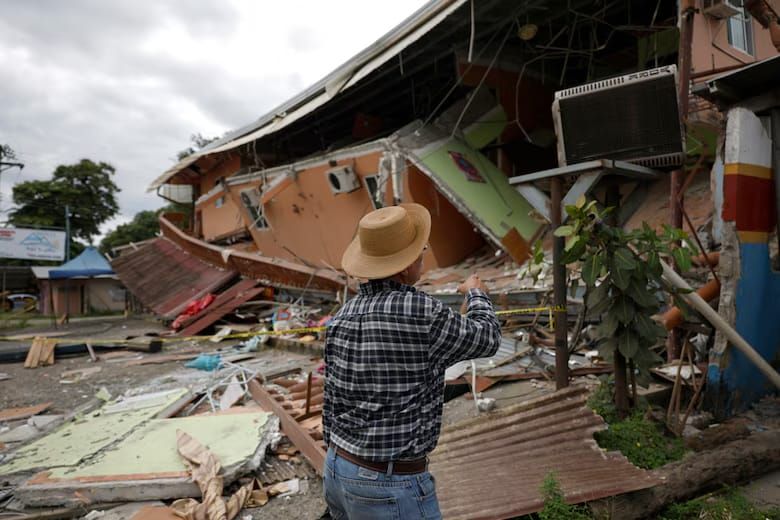
The earthquake that struck Panama on October 9 caused damage across the country, but its economic burden is falling particularly heavily on rural communities in the central provinces.
Preliminary official figures reported 840 affected homes, with Herrera, Veraguas, Los Santos and Coclé accounting for 739 of them. These provinces include farming districts where homes, agricultural work and household income are closely connected.
The concentration of damage partly reflects geography. Communities such as Tonosí, Mariato and Las Minas were closer to the earthquake’s epicentral area, while mountainous terrain contributed to landslides and blocked roads. Poverty did not cause the physical damage, but limited savings, informal employment and dependence on agriculture may make recovery more difficult.
A La Prensa analysis of official statistics found that multidimensional poverty affected 12.2% of Veraguas residents in 2025 and 9.9% in Coclé. Rates were lower in Los Santos and Herrera, although rural communities within those provinces still face precarious employment, deficient housing and restricted access to services.
Agricultural producers have reported damage to livestock-handling structures and milking sheds around Tonosí. The district is an important producer of beef, milk, rice and tomatoes. Blocked access routes created an immediate problem for dairy farmers because milk must be collected and transported daily.
Producer accounts also indicated damage to agricultural roads around Soná and other mountainous areas. Coastal roads in parts of Herrera and Los Santos remained operational, illustrating that conditions vary considerably between communities.
The government said on October 11 that assistance was concentrated in the four most affected provinces. Authorities were distributing food, water and tents, inspecting buildings and reopening roads blocked by landslides. One lane of the Las Tablas–Tonosí road had been restored near Loma Flores, while the road through Mariato was reported passable.
No official, comprehensive estimate of agricultural losses has been published. Initial claims from producers should therefore be treated as preliminary rather than as a complete measurement of the earthquake’s economic cost.
As Panama moves from emergency assistance to reconstruction, restoring homes will be only part of the challenge. Rural recovery will also depend on repairing farm infrastructure, reconnecting communities and ensuring that producers can once again reach collection points and markets.
Sources: La Prensa, La Estrella